
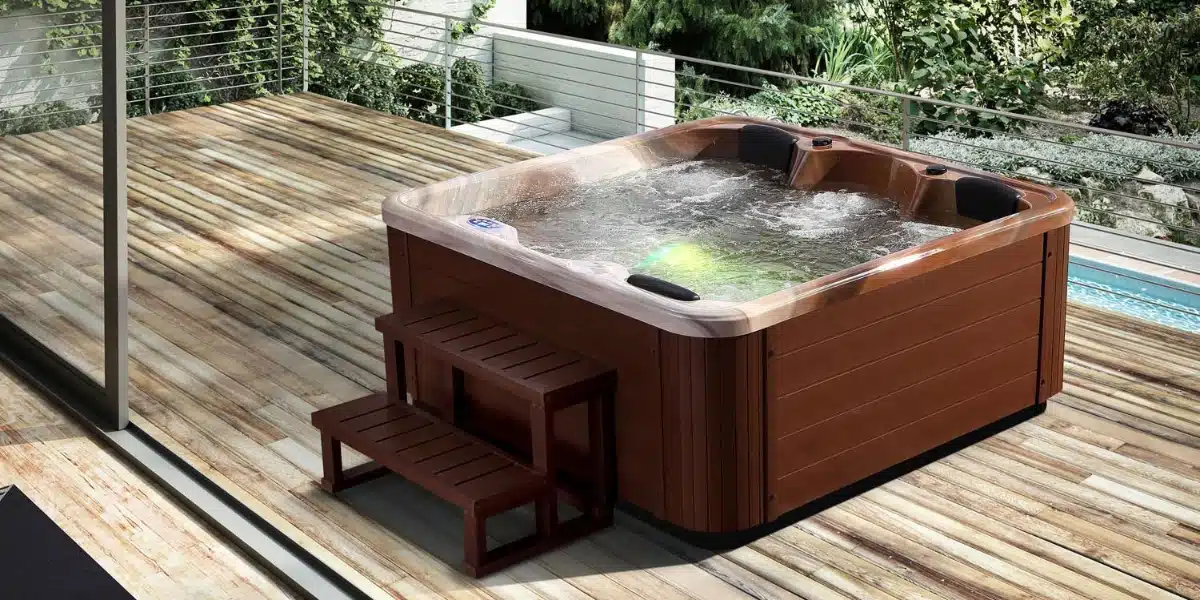
Hot tubs add relaxation, comfort, and social value to homes, but many buyers overlook one critical factor before installation: weight. Understanding the weight of a hot tub matters for deck safety, transportation planning, and long-term placement. A spa may appear lightweight when empty, yet once filled with water and occupants, the total load increases dramatically.
Buyers frequently ask questions like how heavy a hot tub is, especially when preparing a concrete pad, deck, or backyard base. Let’s take a detailed look at hot tub weight, breaking it down step by step.
Understanding Dry Weight Basics
The starting point for any calculation is the weight of an empty hot tub. This refers to the spa shell, cabinet, internal plumbing, pumps, heater, and frame before water or people are added.
Typical Empty Weight Ranges
Most residential spas fall within a broad range. Compact two- to three-person models often weigh a few hundred pounds when empty, while larger family-sized units can reach well over a thousand pounds. Materials such as acrylic shells, synthetic cabinetry, and insulation thickness all contribute to the final figure.
Why Dry Weight Still Matters
Although the empty weight represents only part of the total load, it plays a major role during delivery and placement. Movers, cranes, and access paths all depend on knowing this number in advance.
How Water Changes Everything
Water accounts for the largest portion of a spa’s total load. Once filled, the transformation is dramatic.
Water Weight Calculations
Water weighs roughly eight pounds per gallon. Even a modest spa can hold several hundred gallons, which adds thousands of pounds instantly. This is why people researching how heavy a hot tub is often underestimate the answer.
Comparing Empty and Filled States
When empty, a spa may seem manageable. Once filled, the load becomes several times heavier. This shift explains why placement planning cannot rely solely on dry weight.
Total Weight When Fully Loaded
The most important figure is the total operational load. This represents how much a full hot tub weighs during real use.
Adding Occupant Weight
A filled spa does not stop at water. Bathers add significant weight, especially in models designed for five or more people. Each adult contributes an additional load that decks and slabs must support.
Realistic Load Scenarios
When calculating the average weight of a hot tub, professionals consider the spa shell, full water capacity, and maximum number of users. This combined figure reflects true conditions during daily use.
Why Placement Planning Is Critical
Hot tub weight directly affects where a spa can safely sit. Improper planning risks structural damage and long-term issues.
Deck and Patio Considerations
Decks require reinforcement to handle spa loads. Standard residential decks often lack the strength needed for filled spas. Concrete pads offer greater stability when poured to the proper thickness.
Ground-Level Installations
Backyard placements benefit from compacted gravel or concrete foundations. These bases distribute weight evenly and reduce stress on the spa frame over time.
Weight Differences by Spa Size
Not all hot tubs weigh the same. Size and seating capacity create major differences.
Small and Medium Models
Two- to four-person spas tend to remain on the lighter side, though filled weight still reaches several thousand pounds. These models are suitable for limited spaces or reinforced decks.
Large and Luxury Spas
High-capacity models include more jets, pumps, and water volume. Their filled weight can rival that of small vehicles, making foundation planning non-negotiable.
Materials That Influence Weight
Construction choices affect the spa’s total mass.
Shell and Cabinet Materials
Acrylic shells paired with synthetic cabinets offer durability without excessive weight. Wooden cabinets, while attractive, add extra weight and require more maintenance.
Insulation and Equipment
Full-foam insulation and additional pumps improve heat retention and performance, yet they also increase overall weight. Buyers should factor these upgrades into load calculations.
Transport and Delivery Factors
Weight influences more than just final placement.
Delivery Logistics
Heavier spas may require specialized equipment during delivery. Narrow access paths, slopes, or elevated decks add complexity. Knowing the weight of a hot tub in advance avoids costly surprises.
Installation Day Planning
Installers assess ground conditions, lifting points, and clearance space. Clear communication about spa weight helps crews prepare efficiently.
Common Weight-Related Misconceptions
Many first-time buyers misunderstand spa weight.
“It Looks Lightweight”
Many first-time buyers misunderstand spa weight, which can lead to planning mistakes during installation. One common assumption is that a spa looks lightweight when viewed in a showroom. Empty display models are easy to move and appear manageable, creating a false sense of simplicity. Once filled with hundreds of gallons of water and occupied by several people, the total load increases dramatically, far beyond initial expectations.
“Any Deck Will Work”
Another frequent misunderstanding is the belief that any existing deck can support a hot tub. Residential decks are often built for foot traffic and furniture, not for several thousand pounds concentrated in one area. Elevated decks, in particular, often require professional assessment and reinforcement. Ignoring this factor can result in sagging, structural damage, or long-term safety concerns. Understanding these misconceptions early helps homeowners plan foundations, budgets, and placement more realistically, leading to a smoother and safer hot tub ownership experience.
Regional Buying Considerations
Local climate and soil conditions also affect spa planning. Buyers looking to buy a luxury spa in Utah County often consider frost lines, ground stability, and seasonal temperature shifts when preparing foundations.
Final Thoughts
Understanding the average weight of a hot tub helps homeowners make informed decisions, protect property structures, and plan installations confidently. The difference between an empty spa and a fully loaded one is substantial, driven mainly by water and occupant weight. From delivery logistics to long-term support, weight knowledge shapes every stage of ownership.
Looking for hot tub stores in Provo or beyond? We specialize in helping buyers choose spas that match their space, lifestyle, and installation needs. Contact us today for expert guidance and support as you plan your perfect hot tub setup.